

Learn how to make apple cider vinegar from scraps with this simple, low-waste tutorial. Using apple peels and cores gives those scraps one more purpose before they reach the compost pile—and the process requires only a few basic ingredients.
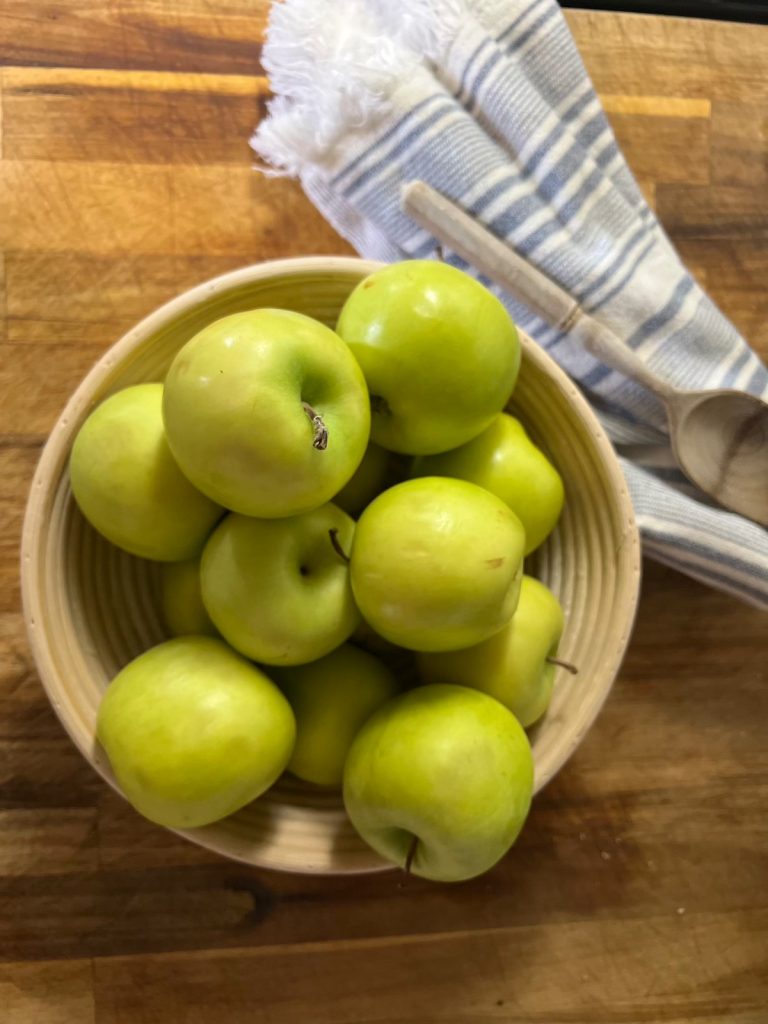
Technically, vinegar made from peels and cores is more accurately called apple scrap vinegar. Traditional apple cider vinegar begins with pressed apple cider or juice. However, apple cider vinegar from apple scraps is the name many home fermenters use for this simple, old-fashioned kitchen project.
Lately, the weather here in Tennessee has been dreary, rainy, and cool—one of those unmistakable signs that fall is on its way. Perhaps that is why my husband began craving my warm and comforting classic apple pie.
He had been asking for one for several weeks, and when I learned that our neighbor’s birthday was coming up, I finally found the motivation I needed. I went to work making two pies: one for our neighbors and one for us.
Apple Cider Vinegar From Scraps as a Byproduct
When making apple pie, you don’t leave the peels and cores on the apples. For the last several years, I have been trying to move our family closer to a zero-waste home. Usually, that means composting food scraps or giving appropriate scraps to our animals.
However, if I can find another useful purpose for something before it reaches the compost pile, I’m on board. Making apple cider vinegar from apple scraps is a wonderful way to turn the peels and cores left from apple pie into a useful kitchen byproduct.
I also plan to make another batch when I can my organic apple pie filling. This is an easy project to begin whenever you are already peeling a large amount of apples.
This post contains affiliate links, which means I may earn a small commission at no additional cost to you. See my full disclosure here.
Is Apple Scrap Vinegar the Same as Apple Cider Vinegar?
Not exactly.
Traditional apple cider vinegar is made by fermenting pressed apple juice or cider. This homemade version begins with apple peels and cores, so apple scrap vinegar is the more technically accurate name.
The finished vinegar can still develop a pleasantly tart apple flavor and can be used in many of the same everyday recipes.
An Important Note About Homemade Vinegar
Because homemade vinegar can vary considerably in acidity, it should never be used for canning, shelf-stable pickling, or any preservation recipe requiring vinegar with 5% acidity.
A home pH reading cannot tell you whether vinegar contains 5% acetic acid. Use commercially prepared vinegar labeled 5% acidity and follow a tested recipe whenever you are canning or making shelf-stable pickles.
Apple cider vinegar from apple scraps is better suited for salad dressings, marinades, cooked recipes that do not depend upon a precise acidity for safety, and simple household cleaning.
What You Will Need for Apple Cider Vinegar from Scraps
- Clean, wide-mouth mason jars or empty pickle jars
- Fresh apple peels and cores
- Organic cane sugar
- Filtered, distilled, or other nonchlorinated water
- Crank apple peeler, optional
- Coffee filters or tightly woven, breathable cloths
- Rubber bands
- A clean spoon
- A food-safe fermentation weight, optional
- A fine-mesh stainless-steel or nylon strainer
- Clean bottles or jars for the finished vinegar
Before You Begin
Making apple cider vinegar from apple scraps is a straightforward process, but a little preparation will help your ferment get off to a good start.
Begin With Good Apples
Choose fresh apples without mold, rot, or badly bruised areas. Cut away damaged portions before peeling the fruit.
I prefer organic apples when I plan to ferment the peels because the peel becomes part of the ferment. However, using organic apples does not make the finished vinegar certified organic unless every ingredient and part of the process meets organic-certification requirements.
Wash the Apples With Plain Water
Wash the apples under cool running water before peeling them. Gently rub the surface to remove visible dirt.
Do not use dish soap or detergent on produce. According to the FDA’s produce-washing guidance, fruits and vegetables are porous and can absorb soap residue. Plain running water is the recommended method for washing fresh produce.
Use Clean Equipment for Apple Cider Vinegar from Scraps
Wash the jar, spoon, fermentation weight, and any other equipment thoroughly before beginning. Rinse everything well so no soap residue remains.
Wide-mouth mason jars are especially convenient because they are easy to fill, stir, strain, and clean. Their wide opening also allows the airflow needed during vinegar fermentation.
A Crank Apple Peeler Makes the Job Easier
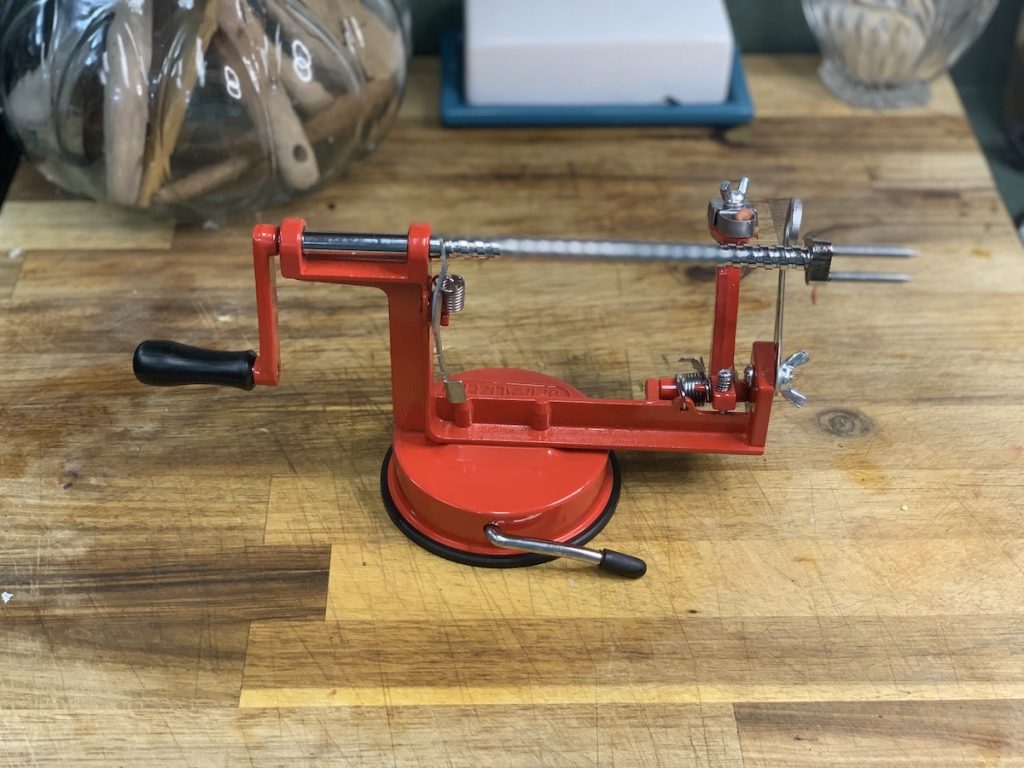
I try not to buy too many single-purpose kitchen gadgets, but my crank apple peeler has earned its place in our kitchen. It makes peeling a large batch of apples much faster, and the kids love using the spiral setting for their afternoon snacks.
How to Make Apple Cider Vinegar From Scraps
Gather the fresh apple peels and cores left from your baking or canning project. Remove the stems and discard any moldy, rotten, or badly bruised pieces.
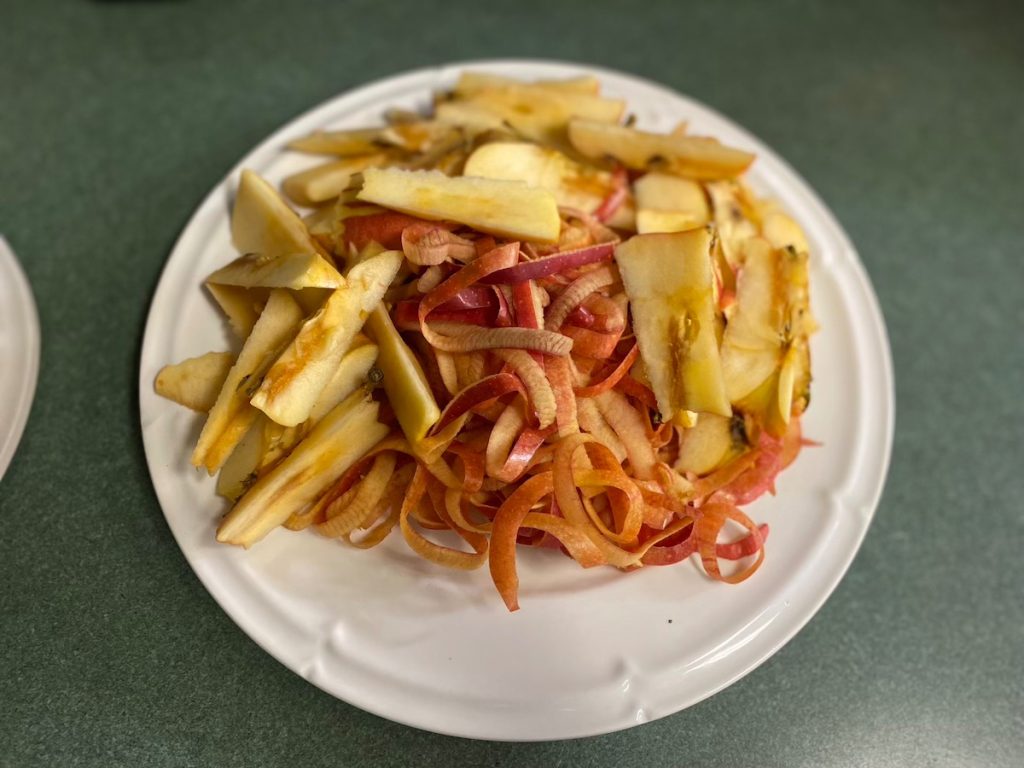
Fill a clean quart-size mason jar approximately two-thirds full with the apple scraps. Leave plenty of room at the top because the scraps will float and the liquid may bubble as fermentation begins.
I learned this lesson the messy way. The first time I filled my jars too full, the liquid spilled all over the counter when I stirred them.
In a separate bowl, stir together:
- 2 cups filtered, distilled, or nonchlorinated water
- 1 tablespoon organic cane sugar
Stir until the sugar has dissolved. Pour the sugar water over the apple scraps, making sure they are completely covered. Add a little more water using the same proportions if needed.
Place a clean, food-safe fermentation weight over the scraps if you have one. Keeping the fruit beneath the liquid helps reduce its exposure to mold.
Do not use ordinary stones or other non-food-safe objects as fermentation weights. Even when placed inside a plastic bag, they may introduce contaminants into the ferment.
Cover the Jar
Cover the jar with a coffee filter or a clean, tightly woven cloth and secure it with a rubber band.
The covering needs to allow airflow while keeping out fruit flies, gnats, dust, and other unwanted visitors. Avoid loosely woven fabric that insects may be able to crawl through.
Do not seal the jar with an airtight lid during active fermentation. The microorganisms involved in converting alcohol into acetic acid need oxygen.
How Does Vinegar Fermentation Work?
Apple cider vinegar from apple scraps goes through two distinct fermentation stages.
During the first stage, naturally occurring yeasts consume sugars from the apples and added cane sugar. The yeasts convert those sugars into alcohol. This is called alcoholic fermentation.
During the second stage, acetic-acid bacteria use oxygen to convert the alcohol into acetic acid. This is called acetic-acid fermentation, and it gives vinegar its characteristic sharp aroma and flavor.
This process is different from the lactic-acid fermentation used to make foods such as sauerkraut and traditional fermented pickles.
Caring for the Apple Ferment
Set the covered jar in a dark place at a comfortable room temperature, away from direct sunlight.
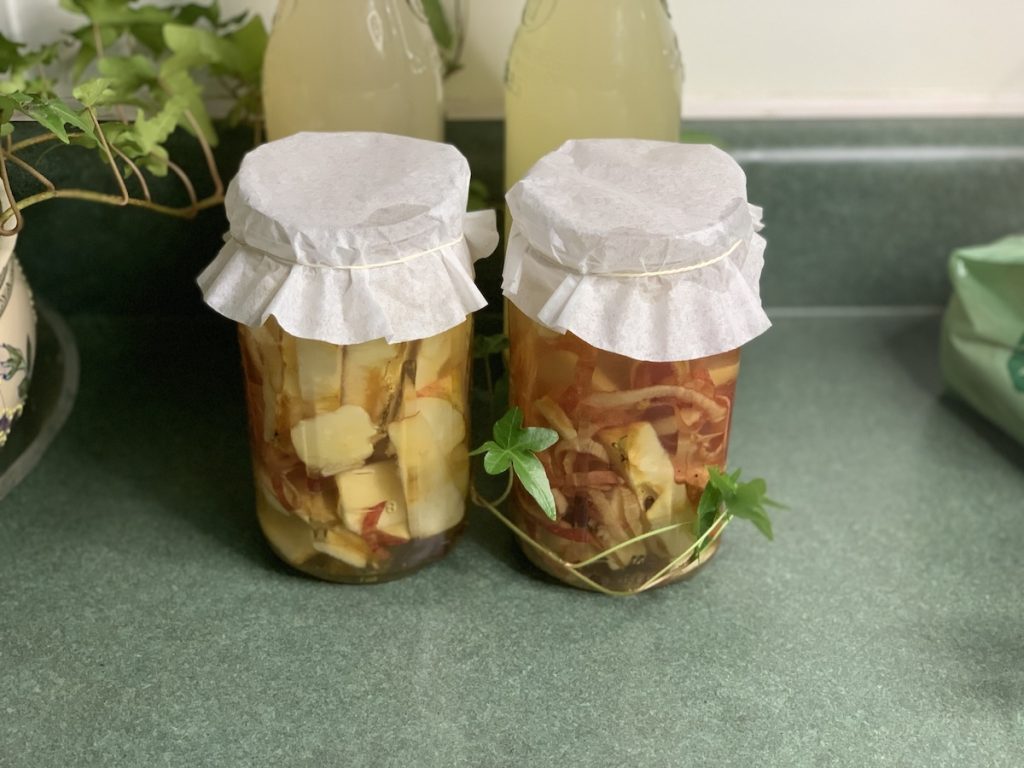
If you are using a food-safe fermentation weight, check the jar daily to make sure the apple scraps remain beneath the liquid.
If you are not using a weight, stir the scraps with a clean spoon at least once each day. Push any floating pieces back beneath the liquid. Regular stirring also introduces oxygen, which the acetic-acid bacteria need later in the process.
You may notice:
- Bubbles in the liquid
- A slightly alcoholic or cider-like smell
- Cloudiness
- Darkening apple scraps
- Sediment at the bottom of the jar
These changes can be normal during active fermentation.
How Long Does Apple Cider Vinegar From Scraps Take?
Fermentation does not follow an exact calendar. The temperature of your kitchen, the sugar content of the apples, airflow, and the microorganisms present in your environment can all affect the timing.
After approximately one to two weeks, the bubbling from the first fermentation may begin to slow and the apple scraps may lose much of their color. The liquid may smell slightly alcoholic, tart, or cider-like.
At this point, strain out the apple scraps. Do not assume the vinegar is finished simply because it has begun to smell sour. The strained liquid still needs time for the alcohol to convert more fully into acetic acid.
The entire process usually takes several weeks.
Mold, Yeast, and the Vinegar Mother
A gelatinous, cream-colored layer may eventually form in the vinegar. This can be a vinegar mother—a colony of cellulose and acetic-acid bacteria. A mother is not harmful and may help start a future batch.
A thin, flat, white film may be yeast. Although some surface yeasts are not dangerous, they can affect the flavor and may be difficult to distinguish from early mold.
Fuzzy growth or spots that are blue, green, black, pink, orange, or otherwise suspicious are signs that the batch should be discarded.
Do not scrape mold from the top and use the liquid underneath. If you cannot confidently tell whether a growth is harmless, the safest choice is to discard the entire batch and begin again.
Strain the Apple Scraps
Place a clean fine-mesh strainer over a bowl or jar and pour the contents through it. A nylon strainer works well, but food-grade stainless steel is also suitable for brief contact with vinegar.
Discard or compost the spent apple scraps.
Pour the strained liquid into a clean jar. Cover it again with a coffee filter or tightly woven cloth and secure it with a rubber band.
The Second Fermentation
Return the covered jar to a dark place at room temperature. Allow the strained liquid to continue fermenting for several more weeks.
The exact timing will vary. Begin checking it after a few weeks. As the alcohol converts into acetic acid, the smell should become sharper and more distinctly vinegar-like.
The finished apple scrap vinegar should smell pleasantly tart and taste acidic rather than sweet or alcoholic. If it smells rotten, putrid, or otherwise unpleasant, discard it.
Once you are satisfied with the flavor, pour the vinegar into a clean bottle or jar, cover it with a lid, label it with the date, and store it in the refrigerator.
How to Use Apple Cider Vinegar From Scraps
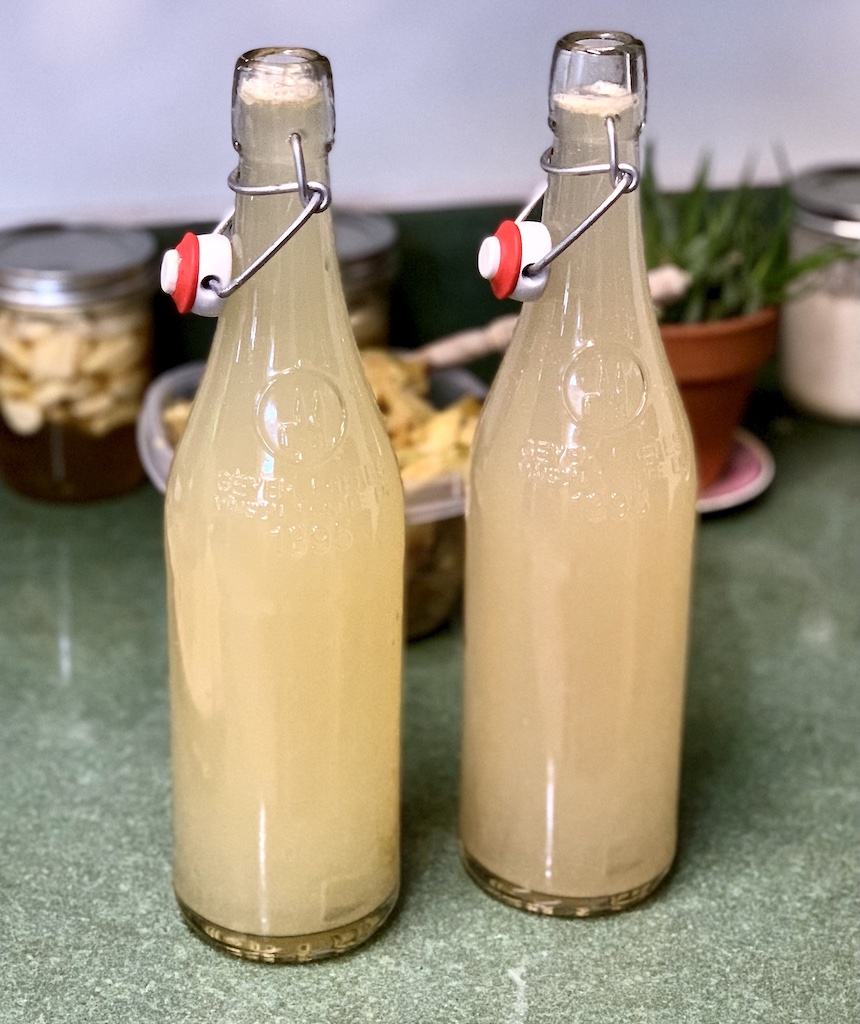
And there you have it: apple cider vinegar from apple scraps that cost very little to make.
Some of my favorite ways to use it include:
- Homemade salad dressings
- Marinades
- Sauces and cooked recipes
- Adding a little tartness to soups or beans
- General household cleaning where a standardized acidity is not required
Because its acidity is unknown, do not use homemade vinegar for canning, shelf-stable pickles, or other food-preservation recipes. It should also not be relied upon as a disinfectant.
For washing fresh apples, grapes, and other produce, the FDA recommends rinsing them under plain running water rather than soaking them in vinegar or washing them with soap.
Frequently Asked Questions
Can I Use Whole Apples Instead of Apple Scraps?
Yes, but this particular method is intended to make use of peels and cores left from another apple recipe. If you begin with pressed apple juice or cider, you are making traditional apple cider vinegar rather than apple scrap vinegar.
Does Apple Cider Vinegar from Scraps Need to Be Refrigerated?
Refrigeration is the safest and simplest way to slow further fermentation and preserve the flavor of unpasteurized homemade vinegar once it tastes finished.
Can I Use Homemade Vinegar for Canning?
No. The acidity of homemade vinegar is not standardized or reliably known. Use commercially prepared vinegar labeled 5% acidity and follow a tested preservation recipe whenever you are canning or making shelf-stable pickles.
What Should I Do if Mold Grows?
Discard the entire batch. Do not scrape away mold and continue using the vinegar beneath it.
Why Isn’t My Vinegar Sour Yet?
The second fermentation may simply need more time. Keep the jar covered with breathable fabric, make sure it has access to oxygen, and allow it to continue fermenting.
If the liquid smells rotten or develops mold, discard it.
Making apple cider vinegar from apple scraps is an easy way to get one more useful product from an apple harvest, pie-baking day, or afternoon of canning. It takes patience but very little hands-on work—and I love knowing those apple scraps served our family once more before finally reaching the compost pile.
Save this tutorial to Pinterest for later.




Leave a Reply